The Shawshank Redemption Review
A critical dive into the best aspects of the film and why it’s still worth watching.
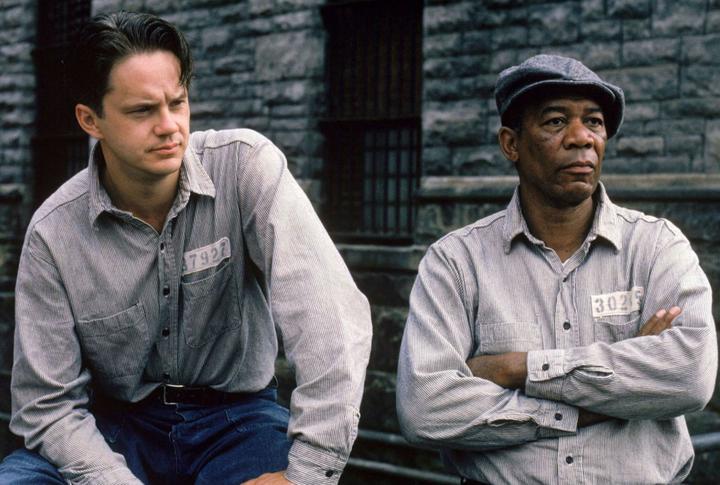 Image credit: Castle Rock Entertainment
Overview
Recently, I rewatched The Shawshank Redemption with some friends. One of us had read the book, but not seen the movie and we decided that now was a great time to watch it. With the world finally beginning to recover from the effects of the COVID-19 pandemic, we could use a little more hope in our lives and there are very few movies that tell a more hopeful story than The Shawshank Redemption.
After rewatching, I can confidently say that its messages remain relevant even today and it still is one of my favorite movies of all time. I hope to explain some of the major things that make this movie great, even when you already know the big twist at the end.
NOTE: This review contains spoilers for the movie.
Cinematography
To begin this review, let’s talk about one of the most impressive things about this movie; the cinematography. This movie has some of the most artistic shots ever put on film. On one level, the shots are just plain beautiful and on another level they hold some beautiful meaning.
The Use of Size To Illustrate Power
One of the very first shots in the movie is this establishing shot of Shawshank prison.
The scene begins with a bus approaching the huge entrance of the prison. Then the camera hovers over the prison walls to show us all the prisoners moving towards the gate to greet the new inmates.
The key thing to note here is how things are sized. The camera is always kept far away from the prisoners in this scene so they appear to be tiny in comparison to the huge prison walls surrounding them. Near the end of the scene, we can see guards come in with guns looming over the prisoners. Whenever the guards are on screen, the camera is kept very close to them so they appear to be large and above the prisoners. At this point in time, Andy is new to the prison and the guards hold all the power over the prisoners.
This visual hint for the audience appears time and time again throughout the movie whenever a change in the power dynamic occurs. Sometimes we’re fearful of those in power, like when the guards are the one who are taking charge over the prisoners in this scene. Other times, the ones in power are the people we’re rooting for like Andy Dufrense and it makes us feel the same empowerment he feels.
One very good example of this is when Andy begins playing opera music over the entire prison.
When the music is played all over the prison, we get a couple shots of both the inmates and the guards staring up at the PA system in shock. The guards in this scene are either the same size of the inmates or smaller. It’s not a stretch to say they are insignificant compared to the prisoners in this scene. As Red puts it, “it was like some beautiful bird flapped into our drab little cage and made those walls dissolve away. And for the briefest of moments, every last man at Shawshank felt free.” The guards in the yard are powerless to stop the hope running through every man at Shawshank and the visuals complement this shift in feeling perfectly.
There are many other examples of this, but another that needs to be mentioned is when Andy finally crawls out of the sewer pipe to freedom.
Shawshank is far away and tiny in comparison to Andy who looks away from it for most of the scene. The obvious way to look at this scene is that his prison days are long gone now and he’s a free man.
Another way to look at it is a visual portrayal of Andy’s spirit. In his entire time at Shawshank, he viewed hope as a good thing and it enabled him to do incredible things such as build a library and escape a high security prison with tons of money. It’s hard to get a sense of how incredible these things are until we get some sort of visual perspective on it. The prison in this shot is certainly nowhere near Andy and we know that every single inch he traveled from that prison to where he is now was through a smelly and dirty pipe with no end in sight while inside. We can tell immediately that he was in that pipe for a very long time and suffered all that pain solely because he hoped it would lead him outside the prison. His hope for things to be better is more powerful than any abuse he receives at the prison.
In just a few seconds we get all of this because of how perfectly the shot is composed. It plays beautifully with the message of the movie and is one of the main reasons this shot is so iconic.
The Ironic Use of Dark And Light
While Warden Norton and the guards are searching Andy’s cell one day, Norton cites a passage from the bible that says “I am the light of the world. He that followeth me shall not walk in darkness, but shall have the light of life.” Following this passage, the movie constantly plays with darkness and light.
The best example of this is when Tommy is gunned down after speaking with Norton.
Interestingly, the scene starts with Norton in the darkness stepping into the light where Tommy is standing. Tommy does not exit the light at all in this scene and there is no darkness anywhere on him for the duration of the scene. He quite literally followed Norton into the light.
Norton, however, is not lit for most of the scene. When the camera zooms into him as he talks to Tommy, we see that half of his face is shrouded in darkness. The only time he is fully lit is when he looks up to the guard that shoots Tommy.
This scene is the exact opposite of the quote he loves so much. He is not the light of the world in this scene. Tommy followed him into the light, but only received death. It’s almost like he looked God up in the face and laughed at him.
At the surface level, we see dark and light similar to how we see good and bad. Light represents innocence and dark represents sin. The Shawshank guards and Warden Norton to the people outside Shawshank are the good guys. They keep order in the prison and make sure the prisoners do not try and ruin society. However, there is so much corruption and twistedness that happens in this movie. The guards are the ones who murder people, the inmates are the ones getting an education, and Norton commits money crimes left and right.
This irony is shown visually in scenes like this all throughout the movie. It’s a simple color trick that highlights the hypocrisy of Norton and prisons in general.
The Passage of Time
This is a subtle detail, but I thought it was fun to include. This movie takes place over a couple decades worth of time. Part of believing this is actually the case is seeing it for yourself. There are several visual cues that time is passing such as the characters getting whiter hair and beards.
My favorite visual cue is when Red goes to appeal for parole. He does this several times throughout the movie and every time there is a new set of people.
Notably in the first two appeals the board is full of men. The last appeal has one women as part of the board. The careful observer of the movie will know that Red began serving his life sentence in 1927 and at the third appeal they say he has served 40 years of his life sentence. That puts the third appeal at the year 1967. In the 60s the Women’s Rights Movement was in play, which advocated for more opportunities and personal freedom for women. Without her even saying a word, the knowledgeable observer can see the change in time through history.
The only other movie I can think of that does something like this is Forrest Gump, and that movie is praised for having a whole movie’s worth of hidden references to the time period its in through the use of American history.
Dialogue
Another great thing this movie has going for it is its screenplay. It is one of the smartest screenplays in film and almost every line is quotable. Here are some of the biggest reasons why.
Biblical References
One of the things that is constantly brought up in the film is The Bible. The prisoners all receive one as soon as they enter the prison, and its ultimately the thing that helps Andy escape. Why is The Bible so important besides just this?
My perspective on this is that The Bible serves as a way of expressing two things through an object; Norton’s hypocrisy and power over people. It’s quite clear that Norton has a tremendous amount of power not just over the prisoners but even people outside the prison. At one point, when he was using the prisoners for free labor, someone had to bribe him to get him to stop taking his income away. Additionaly, he is not regulated by anyone, so he has complete authority over all decisions made at the prison. This includes decisions about who gets to live and who gets to die.
The story essentially sets up Norton to be this god-like figure. He plays around with the lives and freedom of others without any supervision or restraint and therefore gets away with some despicable acts. Him referencing The Bible in almost every scene helps the audience figure out that that’s how he sees himself without him explicitly saying it. We already saw one example of this where he says “I am the light of the world. He that followeth me shall not walk in darkness, but shall have the light of life.” There is also a scene where Andy calls him “obtuse” and he gets so offended by the remark that he sentences Andy to 1 month in “the hole.” For reference, hijacking the prison radio and lockng the guards out of the room only got him 2 weeks in the hole. Blasphemy against the warden seems to be a much more severe offense than this.
Additionally, The Bible acts as this device to show off how hypocritical Norton is. One way this is shown is through the use of what I’ll call “bible-sounding quotes.” What I mean by this are quotes that sound like they came from The Bible, but don’t actually. The best example is the famous “His judgment cometh and that right soon.” At a first glance, it seems like this is indeed from The Bible. However, this is not an actual quote from it. The man who holds this book so dear can’t even find one quote from it to convey the same meaning as the one he hangs on his wall.
We also have the equally famous bible-sounding quote of “Salvation lies within” that sets up the awesome ending. Norton tells Andy this after the surprise inspection of his room when he returns his Bible to him. Norton never opens The Bible Andy has, not even during this inspection. Andy uses this to his advantage by hiding the tool he uses to escape the prison which is part of the reason why this quote is so impactful. The other reason is that it also equally applies to Norton. If he had just looked within The Bible he would have found the hammer and continued to be warden unopposed by anyone.
Both of these quotes could suggest that Norton has not ever actually read The Bible despite what he claims. He puts on this face of innocence and honesty to the public so they’ll trust in him, but underneath the disguise lives a hypocrite. It’s a neat way of building his character and serves to make the ending that much sweeter when he is finally taken down.
Narration
One aspect that makes this movie particularly unique is its narration. Throughout the whole movie, we get narration from Morgan Freeman about how the characters are feeling in the moment.
Personally, I am a firm believer in show not tell. Film is a visual medium and to use words when a picture could suffice seems like a disservice to it. So when you have narration in a film, where it’s all tell and not show, it’s typically a bad choice. In this film however, it works for a few reasons.
The main reason is that the narration complements the visuals instead of substitutes for it. The mark of bad narration is that it explains things that are immediately obvious to any audience member watching the movie. I think the worst example I’ve seen of this is in the film The Emperor’s New Groove. In that movie, the main character Kuzco stops the film in its tracks to remind the audience that he is the main character and nothing else.
Even in its sequel, Kronk’s New Groove where Kuzco only appears for a few scenes, he still does this and acknowledges that it adds nothing of value to the movie. The most obvious question to ask is “why?” Why did the writers feel the need to stop the momentum of the movie completely for this? Was it to make a joke? Was it to make sure people weren’t feeling sad? Did they genuinely think people forgot Kuzco was the main character? Any answer to this seems like the writers did not understand their audience.
In The Shawshank Redemption, however, the flow of the movie is not halted by the narration. Events continue to happen while the narrator speaks and we still see characters acting as well as beautiful shots that complement the words being spoken. We saw one example already when the opera scene went on. The music didn’t stop and time didn’t completely freeze just so Morgan Freeman could narrate over it. The music continued and time pressed on, but every character looked as though they were frozen in time. They were completely in shock by what was going on and Morgan Freeman was there to put in words why they were so shocked. Instead of telling us the obvious “it was very surprising to hear music play over the PA system,” he tells us how people felt free and gained hope from the experience. Something that could not easily be described through picture alone.
The two other great examples of this are the ending and when they are reading Brooks' letter. Since I bring up Brooks later on, I’ll reference the ending.
From just the visuals alone, this is a very simple scene. Red decides that he wants to go to Andy and buys a bus ticket to get to him. Then we see him riding the bus. But how does he feel about the experience? Why did he make this decision? His face alone can’t tell us, but interestingly neither can his words. If you looked at just the script and read the words directly from the narration, you still wouldn’t be able to answer these questions. What’s missing are the visuals of him carving his name next to Brooks' name and staring into the sunset while riding the bus into the unknown. This is exactly what I mean by the narration complementing the visuals and the visuals complementing the narration. Neither can exist alone because they’re made for each other. I can’t think of a movie that has this perfect union of out of body dialogue and visuals.
Relevance To Today
While this movie has a profound message on the human spirit, another terrible thing it highlights is incarceration in America. One fact that people might not know is that the United States has the highest incarceration rate of any country in the world1. We not only have more people in jail than any other country, but we also have the largest proportion of prisoners in our population than anywhere else in the world. Why is this?
I think the best explanation I’ve seen on this topic is Hank Greene’s video on it.
In this video he mentions that part of the reason is that we have conflated being harsh on crime to being harsh on criminals themselves.
When someone is found guilty of a crime, we are quick to give a very extreme sentence. In the film, Andy is given two life sentences for murder. Many people in Shawshank also have life sentences like Red. In real life though, sentences that are nearly as severe as these happen for crimes that are nowhere near as severe. As an example, back in 2011, a man named Willie Sauls stole a woman’s purse and was sentenced to prison for 45 years2. Yes, 45 years for stealing a purse. He was 37 at the time, so if he lives out his whole sentence, he will be over 70 years old. He will have lived half of his life in prison for a very petty crime.
On top of this, the film highlights the problem of institutionalization. When a prisoner is institutionalized, as Red puts it, “These walls are funny. First you hate ‘em… then you get used to ‘em. Enough time passes… you get so you depend on ‘em.” The consequence of these long sentences is that people on the inside get used to the style of living in prison and can’t understand or enjoy life without the harsh rules. Things in the modern world move so quickly that being inside an isolated place like prison for even just a few years can take someone completely out of touch with reality.
It’s hard to imagine life in the modern world without computers. Back in the late 70s, which was around 40 years ago, the first consumer computers were released. The Apple II, which many consider to be one of the first affordable consumer computer, released 44 years ago. If someone like Willie Sauls started their 45 year sentence right before it was released, they wouldn’t know anything about computers. Imagine someone like him trying to get a job without such knowledge. Almost every job on the market requires this knowledge and the search would likely be hopeless. Brooks in the movie makes a similar remark with cars.
You could argue that he could learn about computers while in prison. However, getting access to education in prison seems like a great challenge. It took Andy years to build his library, and it was only due to his unshakeable will and some assistance from the prison workers that it was even able to get done. Even with our massive prison budgets, it’s hard to believe even a sizable fraction of it goes towards education for inmates.
But even if inmates could keep themselves educated, would it matter? Currently, I am looking for my first job. I don’t have a criminal record, I have a bachelor’s degree from a top university, and I have a great GPA from this university. It’s been a month and I haven’t even gotten my first interview. Imagine an inmate trying to do this same thing. They have a criminal record, they likely don’t have much formal education, especially not from any kind of respectable educational institution, and because they’ve been in jail for so long, they probably don’t have any relevant experience. I think someone like this would be dead before they could even get their first interview.
From this perspective, it’s incredible that people even want to leave prison once they’re in. Brooks even tries to murder Haywood so he can stay inside. But isn’t the goal of prisons to correct people so they can go back out into the world changed? How can we know if people have changed if we never even give them the chance to prove it?
Incarceration is a very troubling issue in America and this movie perfectly highlights the fundamental issues with letting this “tough on crime” practice continue. It’s a shame that little has been done to change this.
Conclusion
Overall, this movie is gripping and dramatic. Not only is it a harsh look at one of America’s biggest problems today, but it is also a masterpiece of storytelling. It uses its visuals and script to hold the audience’s emotion captive and play around with it, even if you’ve already been through everything it has to offer. I would highly recommend anyone thinking about watching this again to give it another chance. it just might surprise you.